
Pick corrugated plastic for light, temporary outdoor signs like yard signs. Pick foam board for indoor signs at events, PVC for rigid indoor signs and short-term outdoor use, and aluminum or aluminum composite (ACM) for signs that need to stay up outside. Add reflective material when people need to see the sign at night.
That's the short version. Below we compare each material side by side, explain where each one shines, and help you match the material to where your sign will live. Every material prints in full color, ships the next business day when you order by 12pm, and ships free.
Shop signs by material
Each card below is a different material. Tap through to see sizes, single- or double-sided options and live prices.
-
 Yard Signs
Corrugated Plastic with Optional H-Stakes
As low as $13.99
Shop sizes
-
 Foam Board Signs
3/16" Lightweight Indoor Signs
As low as $15.99
Shop sizes
-
 PVC Signs
1/8" Rigid Board, Single or Double-Sided
As low as $15.99
Shop sizes
-
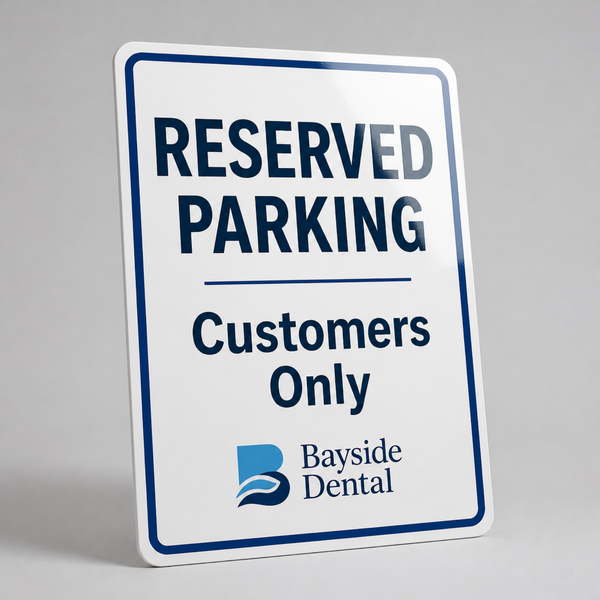 Aluminum Signs
Rust-Proof .040 Aluminum, Rounded Corners
As low as $26.99
Shop sizes
-
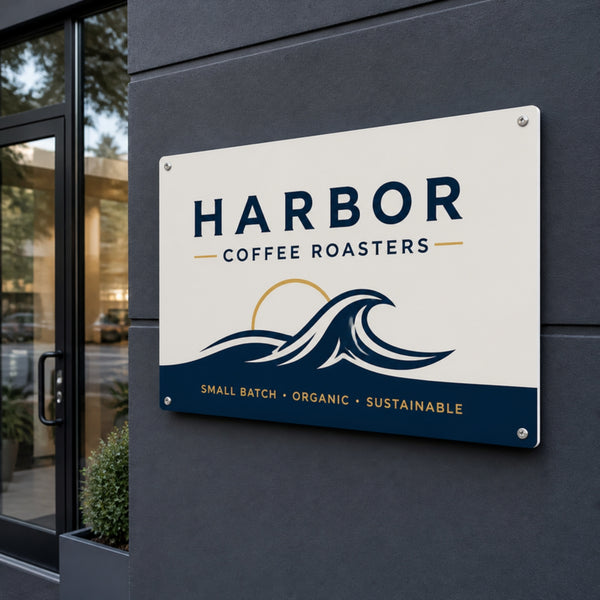 Aluminum Composite Signs
3mm ACM Panels, Rust-Proof
As low as $16.99
Shop sizes
-
 Reflective Aluminum Signs
.040 Aluminum, Rounded Corners
As low as $42.99
Shop sizes

Sign materials side by side
| Material | Indoor / outdoor | Rigidity | Weight | Best for | Typical uses |
|---|---|---|---|---|---|
| Corrugated plastic | Outdoor (temporary) | Flexible, holds its shape on a stake | Very light | Short-term outdoor messages | Yard signs, open houses, campaigns, event arrows |
| 3/16 in foam board | Indoor | Stiff but easy to dent | Very light | Easel and table signs | Weddings, events, pricing boards, presentations |
| 1/8 in PVC | Indoor, short-term outdoor | Rigid | Light to medium | Clean wall signs that feel solid | Lobby logos, office signs, menus, wayfinding |
| .040 aluminum | Indoor and outdoor | Rigid, thin metal | Light | Durable outdoor signs that won't rust | Office hours, parking, rules, safety signs |
| 3 mm ACM | Indoor and outdoor | Very rigid, flat | Medium | Large outdoor signs | Storefronts, building signs, construction project signs |
| Reflective (corrugated, aluminum, ACM) | Outdoor | Same as the base material | Same as the base material | Signs seen at night in headlights | Driveways, parking lots, roadside and safety signs |
Corrugated plastic: the yard sign material

Light, outdoor, made for short runs
Corrugated plastic has hollow channels inside, like cardboard, but it's plastic, so rain doesn't ruin it. It's the go-to for signs you stake in the ground for weeks or a season.
- Slides right onto an H-stake.
- Light enough to carry a stack to every corner.
- Best for open houses, contractors, campaigns and events.
See sizes in our yard sign size guide.
Foam board and PVC: indoor signs

Foam board for events
Our 3/16 in foam board is very light and stands up well on an easel or leaned on a table. It's made for indoor use. It's a smart, low-cost pick for one-day events, but its surface can dent if it's knocked around.
- Wedding welcome signs and seating charts
- Trade show pricing and QR code boards
- Classroom and presentation posters
More on our foam board printing page.

PVC for signs that feel solid
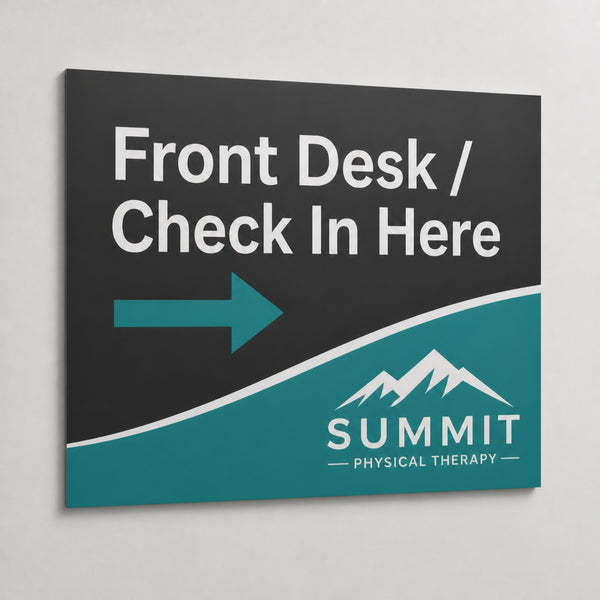
1/8 in PVC is a rigid plastic board. It's tougher than foam board and has a clean, smooth look, so it suits signs that stay on the wall. It works indoors and for short-term outdoor use.
- Lobby and reception logo signs
- Office and room signs
- Menus and wayfinding signs
See PVC sign printing.
Aluminum and ACM: signs that stay outside
When a sign needs to live outdoors, metal is the safer bet. Our .040 aluminum signs are thin, light and rust-proof, with rounded corners. You can add 4 corner holes so they're easy to screw to a wall or post. They're a good fit for office hours, parking rules and safety notices.
3 mm aluminum composite, often called ACM, is two thin aluminum sheets with a solid core between them. That makes it very rigid and flat, even at larger sizes, and rust-proof. Choose ACM for bigger outdoor signs where you don't want any flex, like a storefront panel or a project sign on a site fence. Learn more on our aluminum sign page.

Reflective options for night visibility
Reflective signs bounce headlight light back toward the driver, so they stand out after dark. We offer reflective versions of corrugated yard signs, .040 aluminum, 3 mm ACM and a plastic A-frame. Pick reflective for driveways, parking lots, roadside directions and any sign people need to find at night.
-
 Reflective Yard Signs
Corrugated Plastic, High-Visibility
As low as $26.99
Shop sizes
-
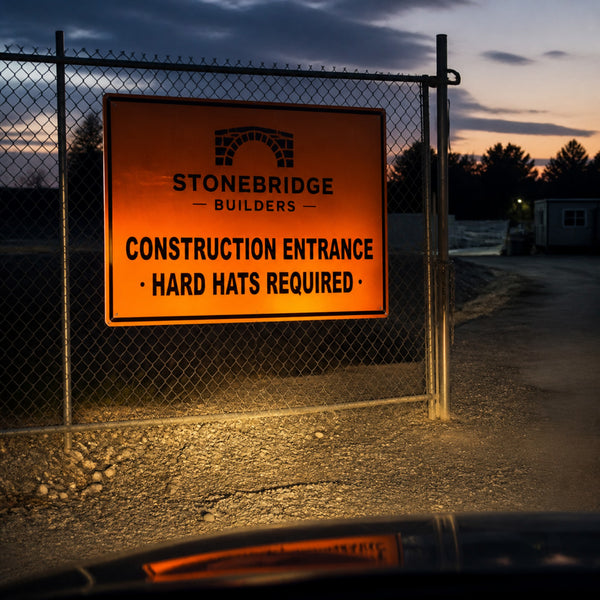 Reflective Aluminum Composite Signs
3mm ACM Panels
As low as $23.99
Shop sizes
-
 Reflective A-Frame Signs
Plastic Sidewalk Sign, 24 x 36
As low as $219.99
Shop sizes


Real examples: which material we'd pick
Open house weekend
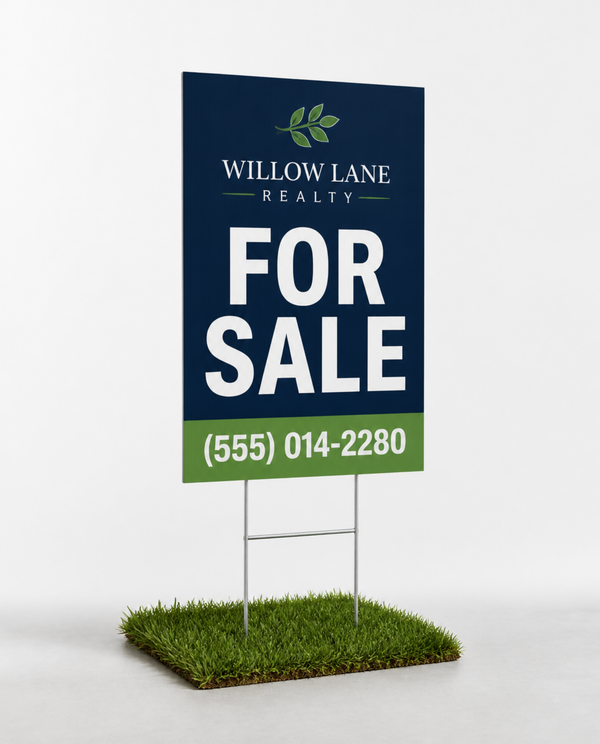
Corrugated yard signs, double-sided, on H-stakes. They go up Saturday morning, come down Sunday night and stack neatly in the trunk for next time.
Dental office hours
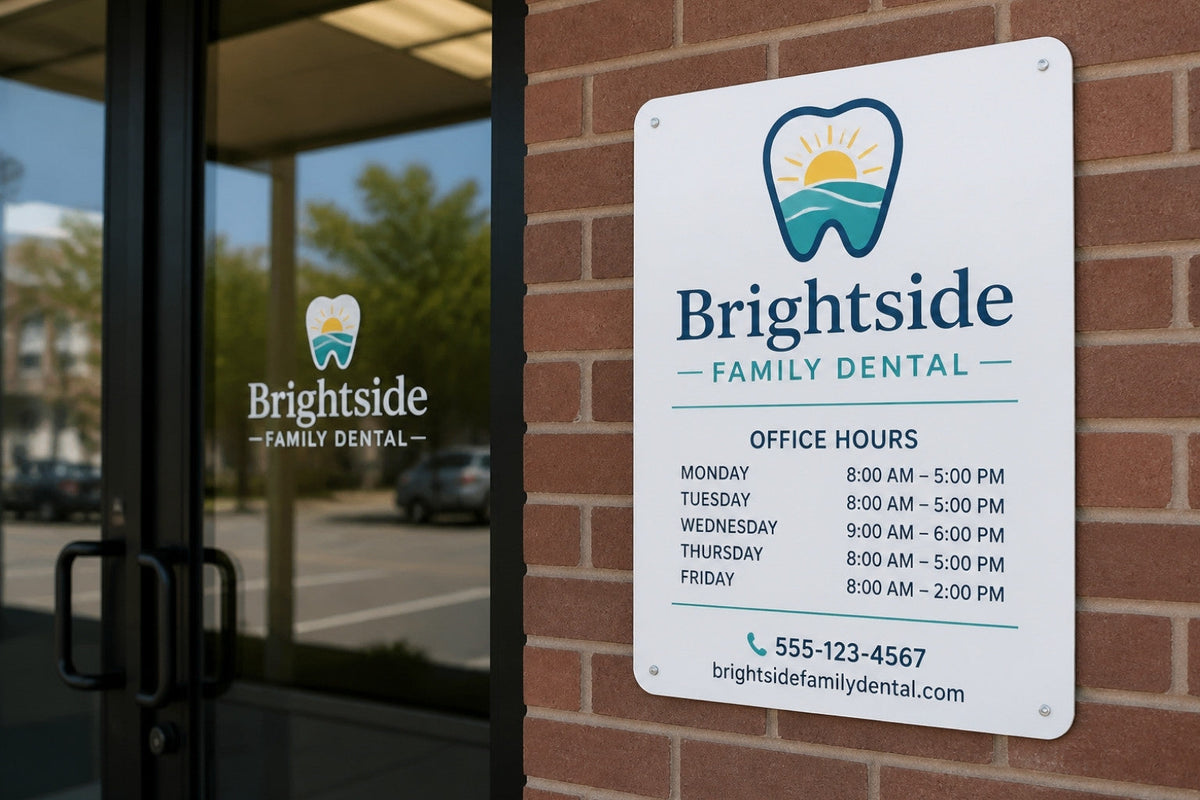
A .040 aluminum sign with corner holes, screwed to the brick by the door. It stays outside all year and won't rust.
Wedding welcome sign
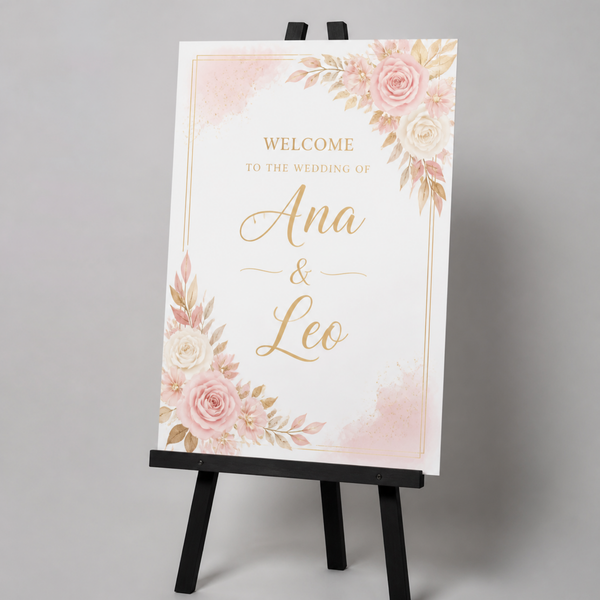
A foam board sign on an easel. It's light enough to carry in one hand and only needs to look great for one day indoors.
Job site project sign
A large 3 mm ACM panel on the fence. It stays flat in the wind and holds up for the length of the project.
Still stuck between two materials? Think about three things: where the sign will live, how long it needs to stay up, and whether people will touch or move it. A sign that gets carried around, leaned on or stored between uses does better in a tougher material. A sign that stays put indoors can be lighter and lower cost. And if one job needs a few different signs, you can mix sizes and designs on a single product page with "Add another job," so every design counts toward one bulk price.
How to choose: a quick checklist
- Indoor only and short term? Foam board.
- Indoor and you want it to feel solid on a wall? PVC.
- Outdoor in the ground for a while? Corrugated plastic with H-stakes.
- Outdoor on a wall, post or fence for the long haul? .040 aluminum.
- Large outdoor sign that has to stay flat? 3 mm ACM.
- Seen at night? Choose a reflective version.
- Seen from both sides? Order double-sided.
Tip. Not sure which one fits your job? Request a custom sign quote and tell us where the sign will go. Real people check every file and order, and we'll point you in the right direction.
Sign material FAQ
What's the difference between PVC and foam board?
Both are flat boards for indoor signs. Foam board is lighter and lower cost, which makes it great for events. PVC is more rigid and tougher, so it suits signs that stay up on a wall.
Can PVC signs go outside?
PVC works for short-term outdoor use. For signs that need to stay outside, choose .040 aluminum or 3 mm ACM.
Is aluminum or ACM better for outdoor signs?
Both are rust-proof. Aluminum is thin and light, which is ideal for small and medium wall or post signs. ACM is thicker and very rigid, which helps larger signs stay flat.
Are corrugated plastic signs waterproof?
Corrugated plastic handles rain well, which is why it's the standard for yard signs. It's built for temporary outdoor use.
Which sign materials come double-sided?
Yard signs, PVC, foam board and aluminum signs can all be ordered single- or double-sided. Pick double-sided when people see the sign from both directions.
More sign guides

How to Design a Sign People Can Read From the Road
Too many words, small letters and weak contrast make signs hard to read. Here are seven simple rules for a sign people can read from the...

Trade Show Checklist: Every Sign Your Booth Needs
From the back wall to the QR code on your table, here's every sign a trade show booth needs, how many banner stands to bring and...

Yard Sign Sizes: Which Size Should You Order?
18 × 24 is the standard yard sign, but it isn't always the right one. Here's every size we sell, how far each reads, and when...
Ready to order your signs?
Order by 12pm and they ship the next business day, free.